

Pricing a Northeast Florida home starts with understanding how its location, features, and condition compare with the surrounding market.
Pricing a home is part numbers, part timing, and part understanding what makes a property feel worth its asking price.
In Northeast Florida, that calculation can change from one neighborhood to the next. And that’s not even getting into the differences between the properties themselves. A coastal home, suburban property, and established house with mature landscaping may attract different buyers, even when their price tags look similar.
Condition, location, features, competition, and the market around your property all help shape the price buyers are prepared to consider. In this guide, we lay out what you need to know to come up with a smart home pricing strategy.
Table of Contents
-
-
- Common Seller Mistakes to Avoid in Pricing
- Start with Analyzing Comps
- Factor in the Condition of the Home Before Setting the Price
- Account for the Market Conditions Shaping Your Price
- Pricing Strategies: Which Approach Fits Your Situation?
- Understand the Cost of Getting It Wrong
- Look Beyond the Asking Price
- How Kellar Realty Helps You Set the Right Price
- Frequently Asked Questions
- Price Your Home with the Market in Mind
-
COMMON SELLER MISTAKES TO AVOID IN PRICING
It is easy to let personal circumstances shape the number you put on a listing. What you paid for the property, how much you have invested in improvements, or what you hope to have left after the sale can all influence your expectations.
Before settling on a price, watch for a few common mistakes:
Anchoring to your purchase price and renovations
What you paid does not establish today’s market value. The same applies to renovations. A new roof, remodeled kitchen, pool, flooring, or other improvements can make a property more appealing, but buyers are unlikely to value every improvement dollar-for-dollar. Consider how those improvements compare with competing properties.
Pricing around your next purchase
The amount you need to fund another home, pay down debt, or reach a financial goal may influence whether selling makes sense, but it does not determine what buyers are willing to pay. Keep those decisions separate when evaluating the property’s value.
Letting emotional attachment influence value
You may know every great feature of the property and remember the work that went into it. Buyers are approaching it differently. They are comparing location, layout, condition, size, amenities, and monthly costs against other options.
Assuming every improvement adds equal value
Improvements can strengthen a home’s appeal, but not every project carries the same weight with buyers. A well-maintained roof or updated major system may address concerns that a highly personalized design choice does not. Consider what the improvement offers compared with the alternatives.
A sound home pricing strategy uses current conditions and buyer demand to establish an asking price that fits today’s market.
START WITH ANALYZING COMPS

Comparing recent sales and current listings helps sellers understand where their property fits within the local market.
The most useful place to begin is with the properties buyers and appraisers are already using as points of comparison. A Comparative Market Analysis (CMA) brings recent sales, current competition, and other listing activity together to show where your property fits.
A strong comparison is more specific than searching for homes with a similar asking price. Focus on the information that provides the clearest picture:
Review recently sold properties
Closed sales provide the strongest evidence of what buyers have actually paid. Recent transactions are particularly useful because market conditions can change. Look for several relevant sales rather than relying on one property that happens to resemble yours.
Study active listings
Current listings show the properties buyers can choose from right now. A home may compare favorably with recent sales but still struggle if competing properties offer more space, better condition, stronger amenities, or a lower asking price.
Look at expired and withdrawn listings
Properties that failed to sell can reveal pricing levels, property conditions, or positioning choices that did not generate enough buyer interest. An expired listing does not automatically mean the price was the only problem, but it can offer useful context.
Choose comparable homes carefully
Location, property type, square footage, lot size, age, bedroom and bathroom count, and overall condition all matter. Garages, pools, renovations, waterfront access, views, and outdoor living areas can also create a significant difference.
Study what buyers are seeing now
Someone searching for Northeast Florida houses for sale may be comparing your property with resale homes, new construction, and properties in nearby communities.
Account for location differences
Two homes in the same general community can compete differently based on street traffic, beaches, school zoning, access to employment centers and military installations, beaches, everyday services, and flood exposure.
The goal is not to find one perfect comparable. It is to identify a reasonable range by looking at several properties with characteristics that genuinely relate to yours.
FACTOR IN THE CONDITION OF THE HOME BEFORE SETTING THE PRICE

Condition, finishes, maintenance, and recent improvements can all influence how buyers evaluate a home’s asking price.
Your home’s condition can influence both what buyers are willing to pay and how they respond to a listing. As part of your home pricing strategy, take an objective look at whether the property is ready to compete as-is or may need more preparation.
Start with the issues buyers are most likely to notice or question:
Look for obvious repairs
Damaged flooring, peeling paint, leaky fixtures, worn exterior surfaces, and other visible issues can give buyers reasons to negotiate.
Check major systems
The roof, HVAC, water heater, electrical, and plumbing can influence buyer confidence and expected ownership costs. If a major component is approaching the end of its useful life, buyers may factor the expense into their offer.
Compare the finishes
Dated kitchens, bathrooms, flooring, lighting, fixtures, and appliances may stand out when competing properties have been recently updated. That does not mean every room needs a renovation. Consider the property’s condition alongside the alternatives buyers can see.
Assess maintenance and move-in readiness
A clean, well-maintained property can make a stronger impression than one that feels like a project. Exterior upkeep, landscaping, cleanliness, and general presentation all contribute to that first impression.
Consider upcoming capital expenses
If the roof, HVAC, exterior, pool equipment, or another major component may need replacement soon, consider how that could affect buyer expectations and negotiations.
Once you understand the property’s condition, there are several ways to respond:
Complete strategic repairs or improvements
Address issues likely to affect marketability or buyer confidence rather than spending simply to make the property feel newer.
List largely as-is
Leave the property in its current condition and account for that condition in the asking price.
Address only the most important issues
Focus spending on repairs or improvements most likely to affect buyer interest, inspection findings, or negotiations.
Deep cleaning, fresh paint, improved lighting, updated landscaping, or a few targeted repairs may improve marketability without the cost of a full remodel.
ACCOUNT FOR THE MARKET CONDITIONS SHAPING YOUR PRICE
Recent comparable sales provide an important benchmark, but they do not tell you everything about the market you are entering. Current inventory, pricing trends, financing conditions, insurance costs, and competition can all affect buyer behavior.
When crafting your home pricing strategy, consider:
Watch inventory, prices, and days on market
Months of inventory can indicate how much competition buyers have, while average sales price trends and days on market provide additional context. Conditions can vary significantly between Northeast Florida communities, so local comparisons are more useful than a broad regional average.
Understand the broader market
Markets across Northeast Florida real estate can differ by community, property type, price range, and buyer pool. Understand what is happening around the specific property rather than relying on a single regional statistic.
Factor in insurance and other ownership costs
Insurance premiums, flood zones, property taxes, and other ownership costs can influence how buyers evaluate a property, particularly when comparing homes with different ongoing expenses.
Consider financing conditions
Mortgage rates affect purchasing power and can influence how much flexibility buyers have on price. The monthly cost of ownership can affect the price range a buyer is prepared to consider.
Compare against new construction
Resale homes may compete with properties offering modern finishes, warranties, energy-efficient features, or financing incentives. Evaluate what your property offers that new construction cannot easily replicate, such as an established lot, mature landscaping, completed upgrades, or a desirable location.
Pay attention to timing
Seasonal shifts and changes in local buyer activity can affect competition and response times. Timing should be considered alongside current market conditions rather than treated as a reason to automatically wait for a particular season.
The goal is not to predict the market. It is to understand the environment your property will be entering and position it accordingly.
PRICING STRATEGIES: WHICH APPROACH FITS YOUR SITUATION?

Your Realtor will help you create a pricing strategy that considers the market and your property’s strengths and weaknesses.
The right home pricing strategy depends on the property, timeline, and level of buyer demand. Three approaches are common:
Competitive market-value pricing
Positioning the home within the range supported by recent comparable sales and current competition gives buyers a clear basis for comparison. This can help attract qualified buyers without creating questions about whether the property is overpriced or underpriced.
Aggressive below-market pricing
A deliberately low price can create urgency when demand is strong and inventory is limited, potentially encouraging multiple buyers to take interest. If demand is weaker than expected, however, a low asking price may reduce proceeds without generating the anticipated competition.
Premium or aspirational pricing
A higher price may be appropriate for genuinely distinctive properties with characteristics such as direct waterfront access, an exceptional lot, distinctive architecture, extensive upgrades, or an unusually desirable location. The trade-off is a smaller pool of potential buyers and a greater risk of sitting on the market if the premium is not supported by buyer demand.
Your pricing approach should reflect what makes your particular property competitive within Northeast Florida real estate, not simply what you would like to receive from the sale.
UNDERSTAND THE COST OF GETTING IT WRONG
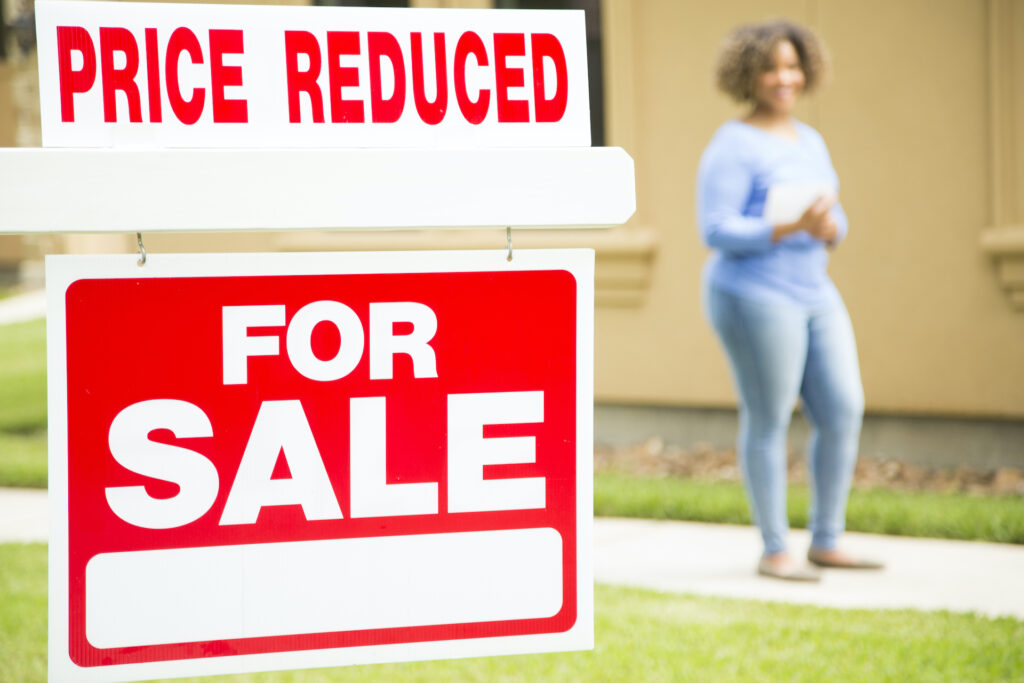
Getting pricing right the first time is essential to a fast and seamless sale.
An asking price that misses the market can become expensive long before the final sale. A home that starts too high may receive fewer showings, spend longer on the market, require price reductions, and give buyers more negotiating leverage.
A listing can become stale
Extended time on market can shift attention from the property’s features to questions about its condition or price. Buyers may wonder why other properties have sold while yours remains available.
Price cuts can change buyer behavior
Buyers watching homes for sale in Northeast Florida may see a reduction and decide to wait for another adjustment. A reduction can also signal that the original asking price was too ambitious.
Relisting does not erase pricing history
Previous listing activity and asking prices may remain visible through MLS records and public listing platforms, giving buyers additional context when deciding how aggressively to negotiate.
Opportunity cost matters
Capital tied up in a property cannot be used elsewhere. A longer selling period may affect plans to purchase another property, reduce debt, or invest elsewhere.
If a property is taking longer to sell than expected, reassess the price against current competition rather than assuming more time will solve the problem.
LOOK BEYOND THE ASKING PRICE
The asking price is not the same thing as what you will actually receive from selling. Selling costs, the remaining mortgage balance, repairs, and other expenses can affect your eventual proceeds.
Consider your potential net proceeds
Start with a realistic sale price and account for the costs of selling and any remaining mortgage balance.
Compare selling with continuing to own
Consider the ongoing cost of keeping the property, including mortgage payments, insurance, taxes, maintenance, and other ownership expenses.
Consider your next housing cost
If you live in the home, compare potential sale proceeds with your ongoing ownership costs and the expense of your next housing arrangement.
Those questions can help turn a home pricing strategy into a broader decision about what makes sense for your property and your financial goals.
HOW KELLAR REALTY HELPS YOU SET THE RIGHT PRICE
Setting an asking price involves more than reviewing figures. With more than 20 years of local experience, the Kellar Realty team considers recent sales, active competition, neighborhood conditions, and the property’s features to establish a realistic price range.
That analysis is shaped around the seller, too. Your timeline and financial priorities can influence how the home is positioned, while showing activity, buyer feedback, competing listings, and offer terms can provide additional context once the property reaches the market.
The goal is to approach your home’s pricing with clear information rather than guesswork, so you can better understand how your property compares with the alternatives buyers are considering.
FREQUENTLY ASKED QUESTIONS
How far in advance should I start thinking about my home’s asking price?
Ideally, begin several weeks before you plan to list. This gives you time to review comparable sales, assess the property’s condition, address worthwhile repairs, and decide how you want to position the home.
Should I price my home differently if I don’t need to sell quickly?
Your timeline can give you more flexibility, but it does not necessarily justify pricing above what the market supports. A longer timeline may allow you to test the market more patiently, but buyers will still compare your property with competing homes.
Can a home be priced too low?
Yes. Pricing below market value can attract attention, but it may also leave money on the table if the asking price does not reflect the property’s actual position. The goal is to create interest without unnecessarily sacrificing value.
How often should I reconsider my asking price?
There is no universal timeline. Watch showing activity, buyer feedback, competing listings, and changes in the market. If the property is receiving little interest despite appropriate presentation, it may be time to reassess the price rather than simply waiting longer.
Does the asking price affect the type of buyers a home attracts?
It can. Price helps determine which buyers see the property as a realistic option and how they compare it with other homes. Positioning the property within the right range can help it reach buyers who are more likely to see its value.
PRICE YOUR HOME WITH THE MARKET IN MIND
Selling a home is about more than arriving at a number. It is about understanding how the property fits into the market around it, what buyers are seeing when they compare their options, and which qualities make your home worth a closer look.
Recent comparable sales, condition, location, competition, and buyer demand provide the framework. A thoughtful pricing approach can help you enter the market with a clearer understanding of where your property belongs and how buyers are likely to evaluate it.
If you’re preparing to sell, Kellar Realty can help you take a closer look at your property’s position and the factors that should inform its asking price.
Call 904.269.7253 or send us a message to talk through your property’s position and what makes sense for your next move.