
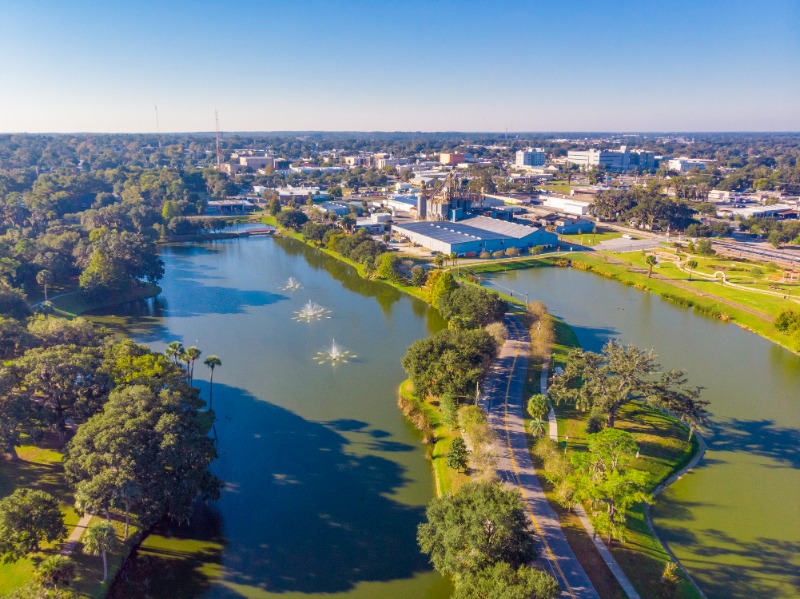
At Kellar Realty & Property Management, we’ve guided countless investors toward smart, profitable real estate decisions in one of Florida’s fastest-growing markets: Ocala, FL. As a full-service brokerage with 23+ years of experience, we’ve watched trends rise and fall, but one remains constant: a well-managed long-term rental (LTR) is one of the most stable and rewarding investments you can make.
Sure, both long-term and short-term rentals (STRs) are viable options in Ocala. The city attracts a mix of snowbirds, tourists, and equestrian enthusiasts. But when it comes to consistent cash flow, lower risk, and scalability, long-term rentals take the lead.
This blog will explore why long-term rentals (LTRs) outperform short-term rentals (STRs) in Ocala—from financial reliability to regulatory simplicity—and why savvy investors are shifting focus. If you’re serious about maximizing returns with minimal volatility, we break down everything you need to know.
Table of Contents:
- Ocala, FL Rental Market Overview
- Financial Comparison: LTRS vs. STRS
- Regulation and Legal Landscape in Ocala
- Insurance and Liability: STRS Are Riskier
- Management Considerations
- Long-Term Wealth Building With LTRS
- STR-Specific Challenges in Ocala
- Final Thoughts: Building Wealth Through Long-Term Rentals
OCALA, FL RENTAL MARKET OVERVIEW
Many investors are training their sights on Ocala, FL real estate—and for good reason. Ocala isn’t just growing; it’s booming. In fact, it was named the #1 city people are moving to outside a metro area in the U-haul Growth Index report for 2024. This explosive growth is transforming Ocala into one of Florida’s most promising real estate investment markets.
Whether you’re considering STRs or LTRs, understanding Ocala’s rental landscape is key to making a profitable investment. And for those exploring homes for sale in Ocala FL or evaluating different neighborhoods, the long-term rental strategy continues to prove strongest.
Population Growth Driving Demand
Ocala’s population surge is being fueled by a combination of strategic location, lifestyle appeal, and affordability. Key drivers include:
- Proximity to The Villages – one of the nation’s largest and fastest-growing retirement communities, which consistently brings new demand for housing and support services.
- Close access to the University of Florida in Gainesville – attracting both faculty and students who need long-term housing solutions.
- Equestrian heritage – as the official Horse Capital of the World, Ocala hosts global equestrian events that continue to attract year-round visitors and new residents alike.
- Lifestyle and affordability – Marion County’s rolling farmland, scenic trails, and family-friendly environment make Ocala a magnet for retirees, professionals, and remote workers relocating from higher-cost states.
With more people moving to stay rather than just visit, Ocala is showing the kind of sustained, long-term demand that gives LTR investors an edge over STR operators.
Key Drivers of Rental Demand in Ocala
Ocala’s rental market shows strength, with households evenly split between owners and renters. With its diverse economic base and community appeal, the city experiences steady year-round demand for housing.
- Equestrian events – International competitions and training facilities draw professionals, workers, and enthusiasts who often require extended housing.
- Healthcare and education – Anchored by AdventHealth Ocala, HCA Florida, and a steady stream of students and staff from the University of Florida.
- Commuter accessibility – Centrally located between Gainesville and Orlando, Ocala provides affordable living within reach of major job markets.
- Retiree migration – Florida continues to lead the nation in retiree relocation, and Ocala’s affordability makes it one of the most attractive destinations.
Housing Affordability and Investment Potential
As of July 2025, the median home price in Ocala is $299,000, nearly 42% lower than the national average. This relative affordability is a major draw for investors, since entry costs remain accessible while demand continues to rise—a combination that provides greater stability, stronger scalability, and long-term wealth-building opportunities.
FINANCIAL COMPARISON: LTRS VS. STRS

For investors in Ocala, FL real estate, the ultimate question is: “Which rental model brings better returns—Long-Term Rentals (LTRs) or Short-Term Rentals (STRs)?” While STRs may seem more profitable at a glance, a closer look at cash flow, occupancy, and expenses often tells a different story.
Long-Term Rentals vs. STRs: Rent Comparison
- Average rent (LTRs): $1,800/month
- Average daily rate (STRs): $178/night (equivalent to $5,340/month at full occupancy)
On paper, STRs may appear more lucrative. However, full occupancy is rarely achieved due to Ocala’s lower tourism volume and seasonal dips. Moreover, it is generally more expensive to operate an STR compared to an LTR.
Operating Expenses: Less is More with LTRs
Standard operating expenses for LTRs are often pegged at 35% to 45% of Gross Scheduled Income. On the other hand, operating expenses for STRs run much higher at around 60% to 80% of gross income due to frequent turnovers, cleaning, utilities, and supplies.
-
60% to 80% of gross income
- Cleaning fees between guests
- Furnishing costs
- Guest communication and concierge support
- Platform service fees (Airbnb, Vrbo, etc.)
- Increased insurance premiums
-
LTRs involve fewer touchpoints:
- Lower maintenance turnover
- No need for full furnishing
- Reduced marketing and management costs
Property Management Fees
- LTRs: Professional property management fees in Ocala average 8–12% of monthly rent, making them affordable and easy to budget into your investment strategy.
- STRs: STR property management can cost 25–40% of gross rental income, given the constant guest turnover, frequent maintenance, and 24/7 communication required. This drastically reduces net profitability compared to LTRs.
Occupancy Rates: Stability vs. Seasonality
- LTRs typically maintain 90–95% occupancy throughout the year with little vacancy between tenants.
- STRs in Ocala rely heavily on event-driven tourism (e.g., equestrian events) and may only achieve an average of 48% occupancy, especially outside of peak seasons.
Example Scenario: LTRs vs. STRs
Let’s break down a head-to-head comparison:
|
|
|
|
|
Rental rate |
$1,800/month |
$178/night |
|
Occupancy |
95% (11.4 months) |
48% (175 nights) |
|
Annual gross income |
$20,520 |
$31,150 |
|
Operating costs (LTRs: 35% to 45% of gross income STRs: 60% to 80% of gross income) |
$7,182-$9,234 |
$18,680-$24,920 |
|
Net income range |
$11,286-13,338 |
$6,230 – $12,470 |
Bottom line: While operating costs and gross incomes may vary from one property to another, the bigger picture paints better profitability for LTRs. Before finalizing your venture, it’s best to crunch the numbers with your financial advisor, be clear about your investment goals, and do due diligence to determine the best way forward for you.
REGULATION AND LEGAL LANDSCAPE IN OCALA
Investing in Ocala, FL real estate is a smart move, but only if you’re clear on the local legal landscape. One of the most overlooked challenges for STR investors is navigating the complex and evolving web of state and county regulations.
STR Restrictions and Permits to Know Before You List
Short-term rentals (defined as rentals of six months or less) are heavily regulated in Marion County and the state of Florida. Investors who fail to comply risk fines, audits, and property restrictions. Here’s what STR owners must handle:
State of Florida Requirements:
- Sales Tax Number: Florida Statute Chapter 212 mandates a Sales Tax ID for anyone renting property for six months or less.
- DBPR License: If you rent your property more than three times per year for less than 30 days, you must obtain a license from the Florida Department of Business and Professional Regulation (DBPR).
Marion County Requirements:
-
Tourist Development Tax: A 4% tax is imposed on all short-term rentals, on top of:
- 6% state sales tax
- 1% Local Government Infrastructure Surtax
- This brings the total tax burden on STR revenue to 11%, a significant hit to your bottom line.
Additionally, STRs must comply with zoning and occupancy codes, which can limit where these rentals are allowed and how many guests are permitted per property.
INSURANCE AND LIABILITY: STRS ARE RISKIER
Unlike LTRs, STRs often require specialized insurance policies that cover short-term occupancy, guest injuries, and property damage. Standard homeowner’s insurance typically doesn’t cover the liability risks associated with short-term guests. STR owners must account for:
- Guest injuries or damages
- Higher premiums
- Legal exposure if not adequately insured
Future Regulatory Risks: The Unpredictable Path Ahead
Ocala and other Florida municipalities are actively re-evaluating STR policies in response to public concern about over-tourism, noise, parking, and neighborhood disruption. In 2025, discussions in Ocala aimed to redefine STR zoning and sober living classifications, signaling potential tightening of STR allowances in the near future.
This kind of legal uncertainty can leave STR owners vulnerable to sudden restrictions—or even bans—on renting altogether.
LTR Stability: A Simpler Legal Path
By contrast, long-term rentals fall under Florida’s established landlord-tenant law, which provides:
- Clear lease structures
- Predictable legal processes for eviction or dispute resolution
- No requirement for tourism taxes or DBPR licensing
- Standard insurance policies sufficient for coverage
Bottom line: With lower regulatory hurdles and fewer surprises, LTRs offer legal clarity and peace of mind, making them the preferred choice for savvy investors in Ocala.
MANAGEMENT CONSIDERATIONS

One of the most overlooked aspects of choosing between a long-term rental (LTR) and a short-term rental (STR) in Ocala, FL real estate is the level of time and management required. While both options can generate income, the difference in lifestyle and workload can be dramatic.
Hands-off vs. High-Touch
- LTRs: Once a lease is signed, LTRs typically require minimal involvement. Tenants handle utilities, pay monthly rent, and often stay for 12 months or longer. For investors with busy careers or multiple properties, this makes LTRs far more passive and scalable.
- STRs: Operating an STR feels closer to running a small hospitality business. Investors must coordinate bookings, cleanings, check-ins, guest communications, and property restocking. Even with automation tools, STRs remain a daily management commitment.
Maintenance and Turnover
- LTRs: With fewer tenants cycling through the property, maintenance needs are typically limited to annual inspections, occasional repairs, and standard turnover at the end of a lease.
- STRs: Guest turnover can occur multiple times per week. That means higher wear and tear, frequent cleaning, more furniture replacement, and a faster pace of ongoing maintenance.
Owner Lifestyle: Which Model Fits Better?
For most investors, especially those who don’t want their rental to become a second job, LTRs align more with a hands-off, long-term wealth-building strategy. STRs, while potentially lucrative in peak seasons, require a hands-on, service-oriented approach that may not suit a busy investor’s lifestyle.
Key takeaway: If your goal is to generate steady income without sacrificing your time, LTRs are the clear winner in Ocala’s rental market. They provide stability, predictability, and less stress while still offering strong returns.
LONG-TERM WEALTH BUILDING WITH LTRS
The true power of an Ocala, FL real estate investment lies not just in monthly cash flow, but in the ability to build long-term wealth. While short-term rentals may deliver bursts of income, long-term rentals (LTRs) provide a proven, sustainable path to financial growth.
Tenant Stability and Lower Vacancy
With annual leases and renewal options, LTRs enjoy far greater tenant stability compared to STRs. Most tenants stay 12 months or longer, reducing vacancy periods and cutting down on costly turnovers. In Ocala’s growing market, where population inflow continues to climb, this stability is a major advantage for investors seeking consistency.
Easier to Scale
Scaling with STRs often means taking on the equivalent of multiple small businesses, each property demanding constant oversight. LTRs, however, are far more systematic and scalable. Once reliable property management is in place, adding additional rental units becomes significantly easier, allowing investors to expand portfolios without multiplying stress.
Appreciation and Refinancing
Owning a long-term rental doesn’t just deliver rental income; it also positions investors to benefit from property appreciation. With Ocala’s median home price around $299,000 as of July 2025, values continue to rise alongside demand. Many investors leverage this equity growth through cash-out refinancing, which can fund additional property purchases and accelerate portfolio expansion.
Tax Benefits
LTRs also offer favorable tax advantages that STRs often cannot match. Some of the key benefits include:
- Depreciation deductions on the property
- Mortgage interest deductions
- Expense write-offs (repairs, maintenance, insurance, management fees)
- 1031 Exchanges, which allow you to defer capital gains taxes when reinvesting in another property
These benefits work together to boost net returns while supporting long-term portfolio growth.
Bottom line: Long-term rentals aren’t just about monthly rent checks; they’re about building generational wealth, scalable investments, and tax-efficient growth in a market like Ocala, which continues to outperform expectations.
STR-SPECIFIC CHALLENGES IN OCALA
While short-term rentals (STRs) can shine in some high-tourism destinations, Ocala, FL real estate presents unique challenges that limit the long-term viability of this investment model. Savvy investors recognize these risks and opt for the stability of long-term rentals (LTRs) instead.
Tourism Limits: Not Orlando or Tampa
Unlike Orlando and Tampa, two of Florida’s powerhouse tourist hubs, Ocala draws a more specialized visitor base. Its appeal is rooted in equestrian events, outdoor recreation, and retirement living, not mass tourism. This means fewer year-round visitors to sustain consistent STR bookings, making occupancy rates much lower than in neighboring markets.
Seasonality and Event-Driven Demand
STR performance in Ocala often spikes around equestrian events, festivals, and seasonal inflows, but drops significantly outside of those periods. With an average occupancy rate of 48% annually, STR investors face long stretches of underperformance compared to the steady, year-round demand of LTRs. Inconsistent income makes it harder to budget, scale, or plan for future investments.
Local Sentiment and HOA Pushback
As STR numbers grow, local residents and HOAs are pushing back against saturation. Common concerns include:
- Noise and parking congestion
- Loss of neighborhood character
- Security and safety issues
These pressures are prompting policy reviews and zoning crackdowns in Ocala, creating additional uncertainty for STR investors. In contrast, LTRs are widely welcomed, since they support stable neighborhoods and contribute positively to the community.
Key insight: Between limited tourism, event-driven volatility, and potential regulatory pressure, STRs in Ocala face too many hurdles to be considered a truly scalable investment model. LTRs, by contrast, thrive in this environment, backed by strong population growth and year-round housing demand.
FINAL THOUGHTS: BUILDING WEALTH THROUGH LONG-TERM RENTALS
When it comes to Ocala, FL real estate investing, both short-term rentals (STRs) and long-term rentals (LTRs) can generate income, but the difference lies in stability, scalability, and sustainability.
- STRs struggle with seasonality, regulatory risks, and high turnover costs.
- LTRs deliver consistent cash flow, lower expenses, and long-term wealth-building potential, all while requiring far less day-to-day involvement.
At Kellar Realty & Property Management, we’ve built our reputation on helping investors maximize ROI while removing the stress of managing properties on their own. With over 23 years of industry experience, our boutique, full-service approach ensures that every client benefits from personalized service, deep market knowledge, and proven strategies.
Whether you’re buying, selling, or investing, our team of experienced real estate agents in Ocala, FL is ready to guide you. From identifying houses for sale in Ocala, FL with the strongest ROI potential to managing your rental properties, we provide a full-service, boutique experience.
Ready to invest in Ocala, FL? Contact us today at 904.269.7253 or email us at [email protected] and let’s discuss your next move.